How Long Does a Flat Roof Last in the UK? (2026)
How long does a flat roof last in the UK? Compare EPDM, fibreglass and felt lifespans, spot early failure signs, and protect your roof for longer.

Table of Contents
- What Is the Average Lifespan of a Flat Roof in the UK?
- Best Flat Roofing Materials UK: Lifespan Comparison
- Why Flat Roof Drainage Importance Determines Roof Life
- How the UK Climate Affects Flat Roof Longevity
- Signs of Flat Roof Failure: When to Repair or Replace
- Practical Tips to Extend the Life of Your Flat Roof
- Building Regulations and Warranties for Flat Roofs
- Conclusion: Get the Full Lifespan from Your Flat Roof
- Frequently Asked Questions
Last Updated: September 5, 2026
What Is the Average Lifespan of a Flat Roof in the UK?
A flat roof in the UK typically lasts between 15 and 30 years, but the exact figure depends almost entirely on the materials used, the quality of installation, and how well the roof is maintained. This wide range explains why asking how long does a flat roof last in the UK often produces different answers from different contractors: they may be quoting for completely different systems.
At Evershield Roofing, we have installed and repaired flat roofs across London and Buckinghamshire for over 25 years, and the single biggest factor we see is material choice. A cheap felt roof may need replacing within a decade, while a properly installed fibreglass system can outlast two felt roofs. Before you budget for a replacement, it pays to understand what you are working with.
The good news is that a flat roof is not a ticking clock you cannot control. With the right specification and routine care, most systems will comfortably reach the upper end of their expected range.
Best Flat Roofing Materials UK: Lifespan Comparison
The best flat roofing materials UK homeowners can choose each offer a different trade-off between upfront cost, lifespan, and maintenance demands. Here is how the main options compare:
| Material | Typical Lifespan | Maintenance Level | Best For |
|---|---|---|---|
| EPDM rubber | 40-50 years | Low | Most homes, single-sheet coverage |
| Fibreglass (GRP) | 25-35 years | Low | Durable, seamless finish |
| Single-ply PVC | 20-30 years | Low | Commercial and large areas |
| Felt (torch-on) | 10-20 years | High | Budget installations |
| Liquid coating | 10-15 years per coat | Medium | Refurbishing existing roofs |
EPDM rubber has become the default recommendation for many UK roofers because it handles thermal movement well and resists UV degradation. Fibreglass offers a hard, seamless surface that stands up to foot traffic and ponding water. Felt remains the cheapest entry point, but it is more vulnerable to blistering and splits, particularly under the British climate.
The critical lesson is that the cheapest material rarely works out cheapest over a 30-year horizon. A quality rubber or fibreglass system installed once will often cost less than two felt replacements in the same period.
Why Flat Roof Drainage Importance Determines Roof Life
Flat roof drainage importance cannot be overstated: standing water is the single most common cause of premature flat roof failure. Unlike pitched roofs, where rain runs off naturally, a flat roof relies entirely on falls, outlets, and gutters to shed water.
When water pools and sits for days or weeks, it accelerates every weakness in the membrane. UV exposure combined with moisture causes the surface to degrade faster, and in winter, freeze-thaw cycles can force water into microscopic cracks, expanding them into splits. Ponding water also adds constant weight, which can stress the structure beneath.
The most common drainage problems we see on surveys in London include:
- Blocked or undersized outlets
- Gutters clogged with leaves and moss
- Inadequate falls created during installation
- Debris accumulating around internal drains
A simple rule applies: if water is still sitting on the roof 24 hours after rain stops, you have a drainage problem that needs addressing. The fix is often straightforward, but ignoring it will shorten the life of any flat roof, regardless of how expensive the membrane was.
Watch Out
Standing water that remains for several days is not a cosmetic issue. It actively breaks down the membrane and can void your manufacturer warranty, leaving you to cover the full cost of an early replacement.
Standing water that remains for several days is not a cosmetic issue. It actively breaks down the membrane and can void your manufacturer warranty, leaving you to cover the full cost of an early replacement.
How the UK Climate Affects Flat Roof Longevity
The UK climate is genuinely harsh on flat roofs, and understanding that helps explain why installation quality matters so much. Frequent rain, high humidity, and temperature swings between seasons create conditions that test every material.
The most damaging combination is UV radiation in summer followed by cold, damp winters. Membranes expand in heat and contract in cold, and this constant movement eventually fatigues the material. In London and the South East, we also see significant wind-driven rain, which forces water into edges and flashing details that would remain dry in gentler conditions.
Moss and algae growth is another UK-specific problem. Damp, shaded roofs encourage organic growth that holds moisture against the membrane and can lift the surface as it spreads. Regular cleaning to remove moss and debris is one of the most effective ways to protect your roof.
The practical implication is that UK homeowners should prioritise materials with proven track records in this climate. EPDM and fibreglass both handle thermal movement well, while some cheaper imported felts are less suited to the combination of UV and moisture that British weather delivers.
Signs of Flat Roof Failure: When to Repair or Replace
Recognising the early signs of flat roof failure is the difference between a minor repair and a full replacement. Catching problems early protects both the roof and the structure beneath it.
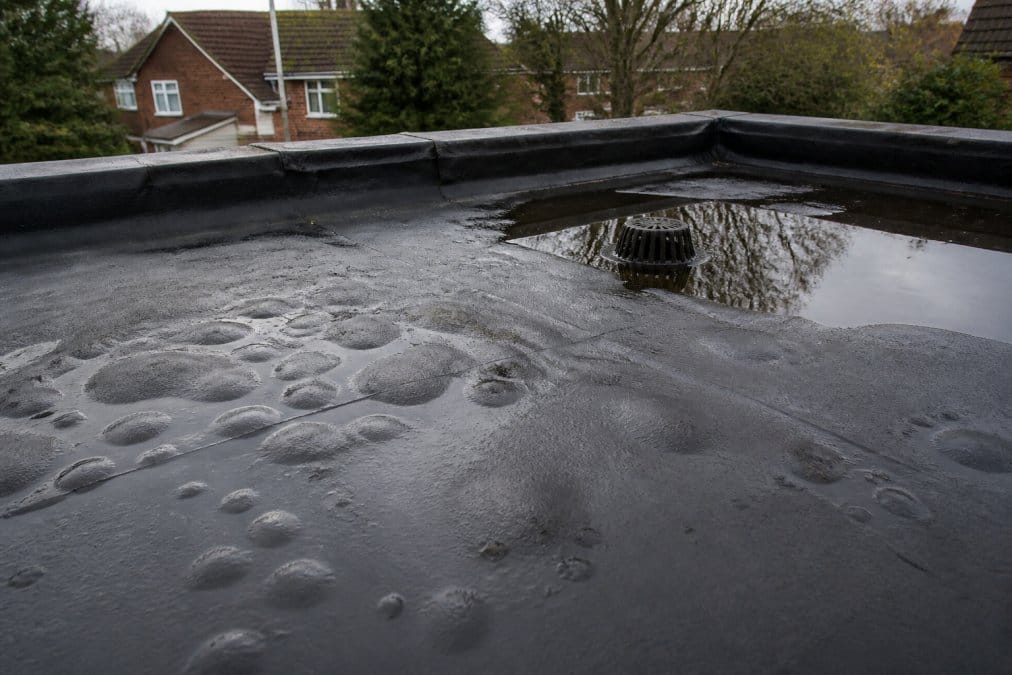
Common warning signs to watch for include:
- Blistering or bubbling on the membrane surface
- Splits, cracks, or tears in the material
- Ponding water that does not drain within 24 hours
- Damp patches or water stains on ceilings inside the property
- Loose or lifting edges around the perimeter
- Excessive moss or algae growth
A few isolated blisters can often be repaired in isolation. Widespread blistering, however, indicates the membrane has lost its bond to the substrate and replacement is usually the more cost-effective route. Similarly, a single split near a flashing detail may be patchable, but multiple splits across the surface suggest the material has reached the end of its service life.
Get Your Free Roofing Quote Today! →
If you are noticing any of these signs, the sensible next step is a professional survey. A roofer can tell you whether a targeted repair will buy several more years or whether you are spending money on a roof that needs replacing anyway.
Practical Tips to Extend the Life of Your Flat Roof
Most flat roofs fail prematurely because of neglect, not because the material wore out. A small amount of routine maintenance, carried out consistently, can add years to the lifespan of any system.
Start with a visual inspection twice a year, ideally in spring and autumn. Look for debris accumulation, blocked outlets, and any visible damage to the membrane. Clear leaves and moss promptly, and check that gutters and downpipes are flowing freely.
Trim overhanging branches that drop leaves onto the roof surface. In shaded areas where moss thrives, consider treating the roof with a suitable moss killer and brushing the surface clean. Avoid walking on the roof unnecessarily, and when access is required, use proper roof ladders or walk boards to avoid puncturing the membrane.
After severe weather, particularly storms or high winds, carry out an extra check. Wind can lift edges and flap loose material, and debris carried by storms can puncture the surface. Catching storm damage within days prevents water from entering the structure.
For commercial property managers in London, scheduling a professional maintenance inspection once or twice per year is a cost-effective way to protect a significant asset. The cost of a survey is minimal compared with the disruption and expense of an unplanned replacement.
Building Regulations and Warranties for Flat Roofs
Flat roof installations in the UK are covered by the Building Regulations, which set standards for thermal performance, structural safety, and weather resistance. Any new roof or full replacement should comply with current requirements, and reputable contractors will handle the necessary notifications.
Approved Document L covers the thermal performance standards that roofs must meet, which typically means adequate insulation levels are incorporated into the build. A properly insulated flat roof does more than keep the building warm; it also reduces condensation risk within the roof structure, which can otherwise cause rot and degradation.
Warranty coverage varies significantly between manufacturers and installers. Most quality systems carry a 10 to 20 year manufacturer warranty, but these are conditional on correct installation and maintenance. Many warranties require proof of periodic inspections, and drainage problems caused by neglect can void cover.
When commissioning any flat roof work in Buckinghamshire, ask for written confirmation of the warranty terms, the manufacturer’s installation requirements, and what maintenance the warranty expects you to perform. A contractor who is confident in their workmanship will be transparent about all of these details.
Conclusion: Get the Full Lifespan from Your Flat Roof
A flat roof in the UK can last anywhere from 10 to 50 years, and the difference comes down to the choices you make. Selecting a quality material, ensuring professional installation, keeping drainage clear, and addressing problems early are the four pillars of a long-lasting roof.
At Evershield Roofing, we bring over 25 years of experience to flat roof installations, repairs, and maintenance across London and Buckinghamshire. Our team is fully insured, offers free surveys and quotes, and provides finance options from 0% APR to spread the cost of major work. Whether you need emergency roof repairs or a complete new flat roof installation, we are available to help.
Get your free roofing quote today and protect your property with a roof built to last.
Frequently Asked Questions
What is the average lifespan of a flat roof in the UK?
A flat roof lasts between 15 and 40 years in the UK, depending on the material. Felt roofs typically need replacing after 15 years, while EPDM rubber and fibreglass systems can last 35 years or more with proper maintenance. The quality of installation and the effectiveness of your drainage have as much influence on lifespan as the material itself. A professionally fitted flat roof with good falls and regular inspections will always outperform one that was rushed or poorly designed.
Which flat roofing material lasts the longest?
Fibreglass and EPDM rubber are the longest-lasting flat roofing materials available in the UK, with expected lifespans of 35 to 40 years when professionally installed. EPDM is a single-ply rubber membrane that handles thermal movement well and resists UV damage. Fibreglass forms a seamless, watertight shell that is highly durable. Both outperform traditional felt, which generally lasts 10 to 15 years, and are more resistant to ponding water and temperature extremes.
Does poor drainage reduce the lifespan of a flat roof?
Yes, poor drainage is one of the fastest ways to shorten a flat roof’s life. Standing water, often called ponding, constantly saturates the membrane, which accelerates degradation and increases the risk of leaks. Over time, the weight of trapped water can also cause the roof structure to deflect. Keeping outlets clear and ensuring the roof has a slight fall towards drainage points is essential. Regular gutter cleaning and soft washing can prevent debris from blocking the system.
How can I tell if my flat roof needs replacing?
Look for blistering or bubbling on the surface, cracks in the membrane, and water stains on ceilings inside your property. Ponding water that remains for days after rain is a warning sign that the falls are inadequate. If you notice tears, splits, or areas where the felt has become brittle, replacement is likely needed. A professional inspection can confirm whether repairs will suffice or if a new roof installation is more cost-effective in the long run.