7 Loft Condensation Mistakes That Cause Damp Problems
Loft condensation in London homes often comes from simple mistakes. Learn the causes, ventilation fixes, and warning signs, then get a free survey.

Last Updated: November 13, 2026
Quick Summary
Preventing loft condensation in London loft spaces means cutting moisture at source with extractor fans and outdoor drying, then restoring airflow so air moves from the eaves to the ridge. Keep a clear 50 mm gap between insulation and roof felt, clear blocked eaves vents, and add vent tiles or a ridge vent where none exist.
- Warm, damp air meeting a cold roof surface causes loft condensation, and it returns when the cause is never fixed.
- Blocking eaves vents with insulation is one of the most common causes of trapped moist air and wet timbers.
- Insulate the loft floor, not the underside of the roof, unless you are converting the space.
- A roof leak shows as a single stain worse after rain; condensation damp is widespread and worse in winter.
- Monitor for a month after the fix, recording hygrometer and surface-temperature readings weekly.
Damp patch in your loft that keeps coming back?Evershield Roofing surveys lofts across London and Buckinghamshire and plans the fix.
Table of Contents
- Why Loft Condensation Keeps Coming Back
- Loft Condensation Causes You Can Actually Fix
- How to Ventilate a Loft Without Wasting Heat
- Loft Insulation and Condensation: Getting the Balance Right
- Signs of a Roof Leak in the Loft vs Condensation Damp
- A Step-by-Step Loft Condensation Fix for London Homes
- Book a Free Loft Survey and Get Your Fix Planned
- Frequently Asked Questions
Why Loft Condensation Keeps Coming Back
Loft condensation is moisture that forms when warm, damp air meets a cold surface in your roof space, and it keeps returning because the cause was never fixed. A patch dries out, then reappears weeks later.
Most people treat the damp patch. Very few treat the air. That is the mistake running through everything below.
Below, we show you the seven mistakes that keep loft condensation coming back, and how to fix each one properly.
Loft Condensation Causes You Can Actually Fix
The fixable causes of loft condensation are everyday moisture from your home and cold surfaces at the roof deck. Both are within your control. Leaks and structural faults need a roofer, but most repeat damp comes down to these two.
Everyday Moisture Sources Inside the Home
Everyday living puts water vapour into the air. Showers, cooking, drying laundry indoors and even breathing all add moisture. In a sealed home, that vapour rises and finds the coldest place it can: your loft.
A common mistake is drying washing on radiators with the loft hatch open. That sends a steady stream of damp air straight up. Use an extractor fan in the bathroom and kitchen, and dry laundry outdoors or in a vented dryer where you can.
Cold Bridging and Poor Airflow at the Roof Deck
Cold bridging is where a cold bridge, such as a steel beam or timber rafter, lets heat escape and creates a cold spot for moisture to settle. Poor airflow makes it worse. If air cannot move through the loft, damp air sits against cold felt and condenses.
Watch out: blocking the eaves vents with insulation is one of the most common causes we find. It traps moist air and turns a small problem into wet timbers.
How to Ventilate a Loft Without Wasting Heat
You ventilate a loft by letting air move through the eaves and out at the ridge, without opening the heated rooms below to the cold. The goal is airflow at the roof deck, not a draughty house. Roof spaces can be tight, so the practical target is a continuous low-level inlet at the eaves and a high-level outlet at the ridge or via vent tiles.
Here is how to get the balance right:
- Check the eaves vents are clear of insulation and debris. Mineral wool pushed tight into the eaves can close the inlet entirely.
- Keep a gap between insulation and the roof felt so air can pass. A clear 50 mm gap between the top of the insulation and the underside of the felt is the usual minimum most practitioners work to; check the felt manufacturer’s guidance for your specific membrane.
- Fit vent tiles or a ridge vent if the loft has none.
- Never seal the loft completely to “keep the heat in”. A sealed cold roof traps moisture against the felt.
- Keep the loft hatch draught-proof but not airtight. A fully sealed hatch stops the small amount of air exchange the roof space needs.
Watch out: blocking the eaves vents with insulation is one of the most common causes we find. It traps moist air and turns a small problem into wet timbers.
Measuring the Conditions, Not Just Guessing
Air temperature alone tells you very little. Condensation forms when the roof deck or felt surface falls below the dew point of the air in the loft. A cheap hygrometer and an infrared thermometer let you check both: measure the air temperature and relative humidity near the hatch, then measure the surface temperature of the felt or rafters. If the surface is at or below the dew point, moisture will settle there regardless of how warm the room below feels. Keeping the roof-deck surface above the dew point of the loft air is the key target, and the exact conditions depend on the membrane and the building.
London Roof Types and What They Need
- Victorian and Edwardian terraces: often have minimal eaves ventilation and old bitumen felt. Prioritise clearing the eaves and adding high-level vent tiles.
- 1930s semis: frequently have deeper eaves but insulation pushed into them; restore the 50 mm gap first.
- Purpose-built flats and mansion blocks: shared roof spaces can have poor cross-ventilation; a ridge vent plus clear eaves is usually the minimum.
If you are unsure what your roof already has, a loft survey will show you where the airflow is blocked.
Loft Insulation and Condensation: Getting the Balance Right
Loft insulation and condensation are linked, and getting the balance wrong makes damp worse. Insulation keeps heat in the rooms below. But if it is packed tight against the roof deck, it blocks the airflow that carries moisture away.
The rule is simple: insulate the floor of the loft, not the underside of the roof, unless you are converting the space. Leave a clear gap at the eaves. If you have added insulation recently and damp appeared after, the two are probably connected.
For a wider look at roof faults that mimic damp, see our rundown of common flat roof problems.
Signs of a Roof Leak in the Loft vs Condensation Damp
A roof leak usually shows as a stain that grows after rain, while condensation damp is spread across cold surfaces and worse in cold mornings. Telling them apart saves you from paying for the wrong fix.
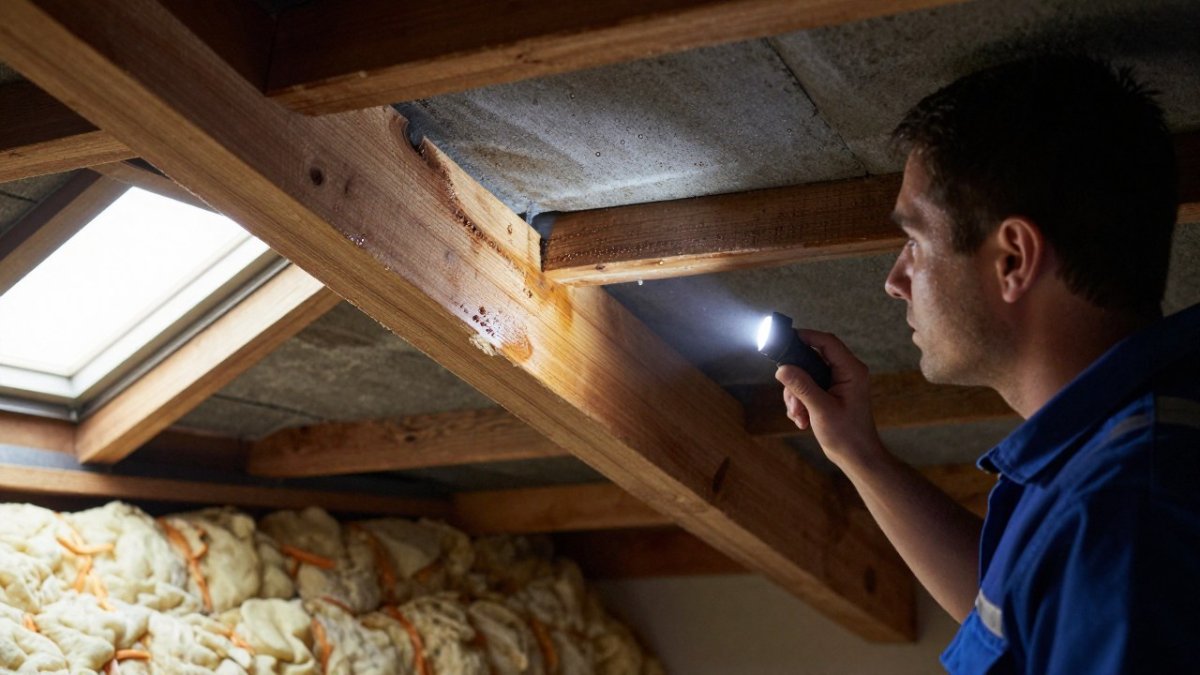
Look for these differences:
- Leak: a single stain, brown tide marks, worse after storms.
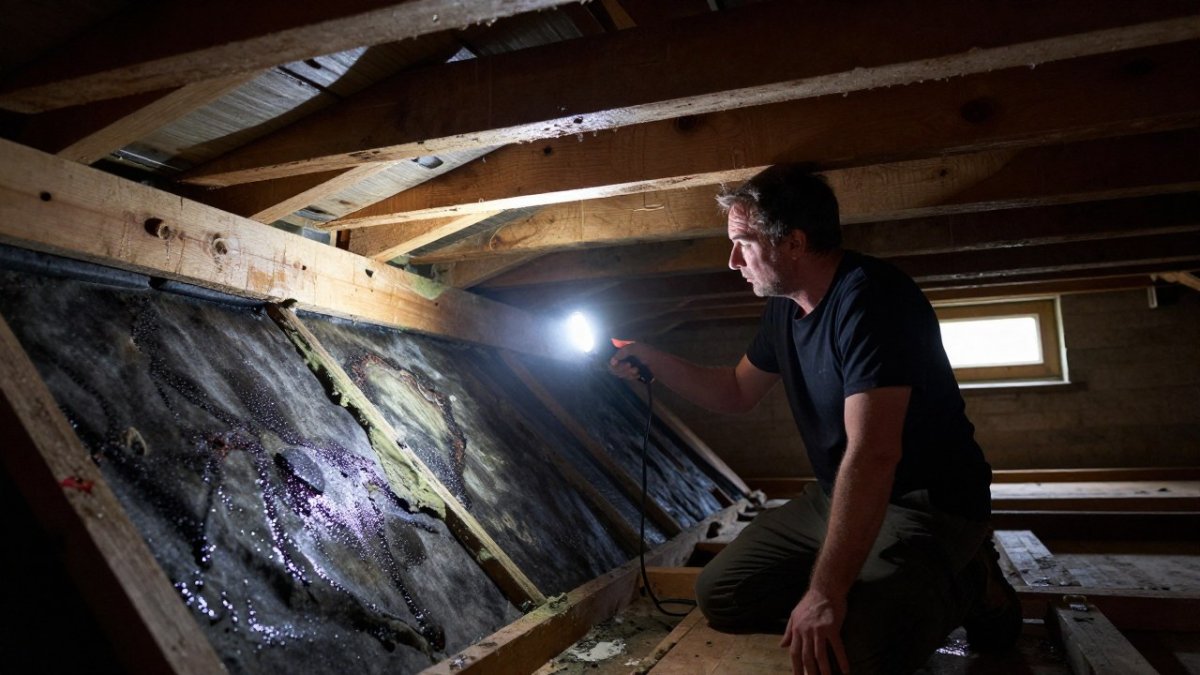
- Condensation: widespread damp, black mould on timbers, worse in winter.
- Leak: water tracking down a rafter to one spot.
- Condensation: droplets on felt, damp insulation, musty smell.
If you suspect a leak, read our guide to why emergency roof leaks happen in winter. And if damp has been sitting for months, it is worth knowing what happens if roof leaks are ignored.
A Step-by-Step Loft Condensation Fix for London Homes
Fixing loft condensation in London homes follows a clear order: stop the moisture, restore airflow, then check the roof. London’s older terraces and flats often have tight roof spaces with little ventilation, so the airflow step matters most. What most guides miss is a decision framework: before you start any work, decide whether conditions allow it, and after you finish, measure whether it worked.
The Go/No-Go Check Before You Start
Work through this before lifting insulation or applying any sealant or membrane:
- Air and surface temperature: check the loft air temperature and the roof-deck surface temperature with an infrared thermometer. If the surface is at or below the dew point, do not seal or insulate until conditions improve.
- Humidity: a hygrometer reading above roughly 70% relative humidity in the loft means moisture is already present; ventilate first.
- Rain risk: check the forecast for the next 24 hours. Do not open the roof covering or apply sealants if rain is likely before the work can be closed up.
- Frost and dew: on cold mornings, felt and timbers can be wet with dew even when it has not rained. Dry surfaces before applying anything.
- Wind: high wind makes working at the eaves and ridge unsafe and can drive rain into an open roof.
- Time available: allow enough time to complete and close up the work before the next weather change.
The Fix, in Order
- Cut the moisture source. Use extractor fans, vent the dryer, and dry laundry outdoors.
- Clear the eaves. Remove insulation blocking the vents and any debris.
- Restore the airflow gap. Keep insulation clear of the roof felt, with the 50 mm gap described above.
- Add ventilation with vent tiles or a ridge vent if needed.
- Check for leaks. Get a roofer to confirm the damp is not water ingress.
- Monitor for a month. Record hygrometer and surface-temperature readings weekly. If damp returns, the airflow is still wrong.
Watch out: painting over mould without fixing the airflow just hides the problem.
London Weather Windows
London’s climate is mild but changeable, and the practical window for roof work is narrower than the forecast suggests. Late spring and early autumn often give the most stable dry spells; winter brings short days, frost and dew that keep surfaces wet well into the morning. Plan work for the middle of the day when surfaces have had time to dry, and confirm the deck is dry before sealing.
Before you spend on a fix, it helps to understand how water damage affects resale value.
Here is the order to tackle loft condensation, from cutting the moisture source to checking whether the fix worked.
| Step | What to do |
|---|---|
| 1 | Cut the moisture source with extractor fans and outdoor drying |
| 2 | Clear the eaves of blocking insulation and debris |
| 3 | Restore the airflow gap, keeping the 50 mm gap |
| 4 | Add ventilation with vent tiles or a ridge vent |
| 5 | Check for leaks with a roofer |
| 6 | Monitor for a month, recording readings weekly |
Book a Free Loft Survey and Get Your Fix Planned
Having the roof checked properly is the way to address repeat damp. Evershield Roofing offers free surveys and quotes.
Our team has 25 years in the industry and is fully insured. We handle roof repairs, new roof installations and flat roofs. Finance is available from 0% APR if you need to spread the cost.
Not sure who to trust with the job? Our guide on choosing a roofing contractor in Buckinghamshire walks you through the questions to ask.
Get started with Evershield Roofing and get your loft condensation sorted for good.
Loft condensation will keep returning until you fix the air, not just the damp patch.
Frequently Asked Questions
How can I prevent condensation in my loft?
Stop moist air reaching the cold roof deck and give any that does a way out. Fit trickle vents to windows, run extractor fans in bathrooms and kitchens, and keep the loft hatch sealed. Make sure vents at the eaves are clear of insulation so air can move through the loft. Where the roof has no ventilation path, a roofer can add tile vents or ridge vents. Fixing the source of the moisture is always cheaper than dealing with the damp that follows.
Why is there condensation in my loft in winter?
Winter is when the gap between indoor and outdoor temperatures is widest. Warm, moist air from cooking, showers and drying laundry rises into the loft and hits a cold roof deck, and the vapour turns back into water on the timber and felt. The same air can stay trapped if the loft has little ventilation. That is why loft condensation is far more common between October and March than in summer.
Can loft insulation cause condensation?
Insulation itself does not create moisture, but badly fitted insulation traps it. Pushing insulation tight into the eaves blocks the airflow vents, and compressing it over joists reduces its performance. Both leave the loft colder and damper. Keep a clear gap at the eaves, fit insulation to the correct depth without squashing it, and check for damp patches after heavy cold spells. If insulation is already soaked, it needs removing and replacing.
How do I tell the difference between condensation and a roof leak?
Look at where and when the damp appears. Condensation shows as fine droplets on felt, timber and metal, usually across a wide area and worst on cold mornings. A leak leaves a defined stain, often brown, that grows after rain and may track down a rafter. Damp patches near a chimney, valley or flashing point to a leak. If you are unsure, a free roof survey will confirm which problem you have before you spend money on the wrong fix.